Lansing MI

#BetterCallPaul – Authenticity Webinar with 2nd Brain Collective

Stock images. Photoshop. Influencer advertising.
Everybody’s doing it, but does that make it right?

MConnexions Principal Strategist, Julie Holton sits down with her 2nd Brain Collective colleagues, Paul J Schmidt of UnoDeuce Multimedia, and Adam Suiter of 360 Photo & Design.

Guest Post: Go the Extra Mile: 4 Ways to Be a Better Leader at Work

Developing and honing leadership skills can allow professionals to kick their career into high gear. Becoming a better communicator and learning ways to motivate others or improve morale can have many benefits. Employing the following strategies can help make it easier to go the extra mile.

Communication Is Key

Communication skills are perhaps the most important aspect of being an effective leader. Learning how to communicate more concisely or finding ways to become a better listener. Even the most accomplished leaders may have little to offer others should they fail to find ways to communicate effectively. Effective leadership also means being able to facilitate communication among team members and when dealing with third-parties.

Recognize and Reward Accomplishment

Poor morale is never a concern that should be taken lightly. Celebrating the accomplishments of the team and ensuring that the contributions of each member have been recognized can make a tremendous impact. Leaders who fail to give others their time in the sun may quickly run into problems that stem from low morale.

Don’t Be Afraid to Listen

While leaders may have a larger role to play, their efforts and contributions are no more or less important than those of their underlings. Failing to establish and maintain a rapport with the entire team is a common mistake, one that could leave a team leader to cut themselves off from a wealth of valuable ideas and unique insights. Good leaders understand that their role is to assist their workers and not the other way around.

Seeking Outside Resources

Teams can accomplish more than individuals, but no one group may possess all of the resources that may be needed. Seeking help from a third-party, working with a Lean Six Sigma consulting company or contracting with other professionals who may be able to augment the insight, abilities and resources of the team can make quite a difference. Knowing when and where to seek additional resources often means that larger problems and challenges may be surmounted with greater ease.

Possessing the right qualities and leadership abilities can provide professionals with the means to advance their career or meet any challenges the future may hold. Learning how to ways to develop leadership skills that will have the biggest impact can be an important initial step. Learning how to better manage a team, direct a group or to inspire individual workers to achieve greater heights can make it that much easier for professionals to go the extra mile.

Emma Sturgis

Emma is a freelance writer based out of Boston, MA. She writes most often on health and education. When not writing, she enjoys reading and watching film noir. Say hi on Twitter @EmmaSturgis2

Client Post – How To Measure The Effectiveness Of Your Video Efforts

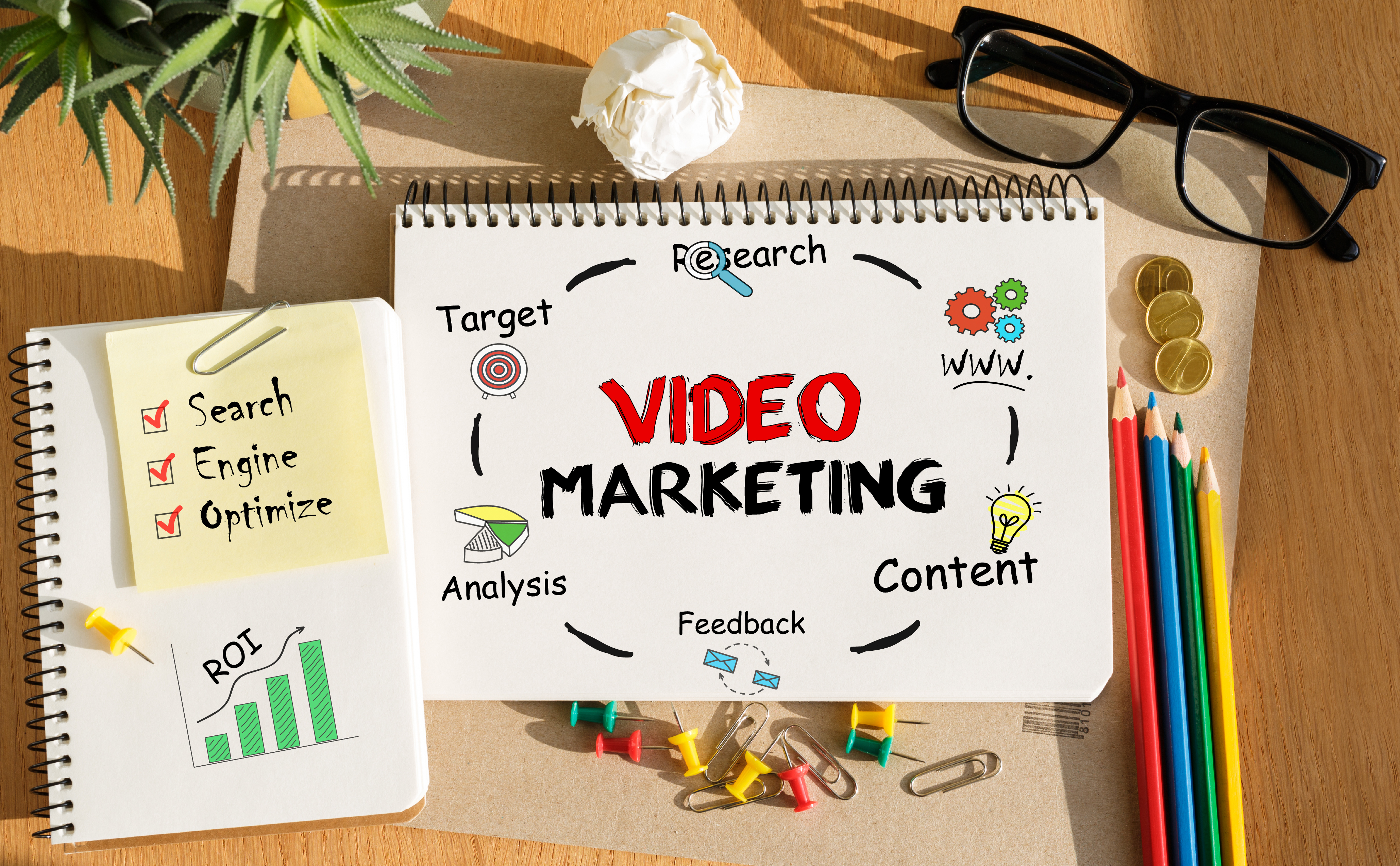
As a business owner and marketing director, I’m always asking myself, is it worth it? Every time I launch a marketing campaign, I’m looking for it to produce certain results. I hope for a specific objective — more sales, more leads, lower cost of acquisition, etc.

And video is no exception. Due to the higher cost of video — at least compared to other marketing channels, like posting on Facebook, it’s critical to be able to answer the question, is video worth it?

Adding video to your marketing can help. There is a ton of research published by marketing companies that show the show the importance of video to your business. Customers want to watch videos from companies, according to research done by Hubspot.

But, in a small, local business, we need to be careful. While all of the data shows that video performs better than a lot of other marketing, most small, local businesses have a very fixed budget.

So, it’s important that all video marketing efforts are still held accountable to the results you’re hoping to achieve — like profits, sales, brand awareness.

In this article, I’m going to give you a framework for thinking about the effectiveness of your video efforts. This is based on my own personal experience running a Lansing-real estate agency and implementing video into my own company, The Dolinski Group.

This framework can be used whether you run a for-profit company or a non-profit. It applies if you’re a business owner, and it applies if you’re the marketing director for an organization.

It will help you evaluate each video project you complete or help you evaluate a potential video project. In a sense, it helps you run a cost-benefit analysis.

Let’s dive into how you can measure the effectiveness of your video efforts.

Determine Your Objective

When evaluating any of your marketing efforts, you need to be very clear about your objective.

What do you hope to achieve? Why do you want to add video to your marketing or why did you add video to your marketing?

Every business will have a different reason. Your organization is no exception.

Your goal when answering this question is to get to a specific metric. A number. It’s insufficient to add video because “it’s cool” or you have some money left over at the end of the year.

The companies that struggle to get positive results from video often don’t have a clear objective. They’re adding video just because.

Get to a number. It could be anything — brand awareness, increased profit margin, lower acquisition costs, faster sales cycle, increased average donation at an event. Anything that might be important to you or your organization.

Whatever your objective, it can be grouped into one of two categories – top funnel or bottom funnel.

Top funnel marketing is focused on building brand awareness, brand sentiment, lead generation, or educating leads.

This was the case for Strawesome:

Bottom funnel marketing is focused on generating revenue and converting leads. It’s getting more people to buy your services or product.

For example, that was the case when I hired UnoDeuce to create a series of testimonial and case study videos for me.

I believe most organizations should focus on the bottom of the funnel, which I will explain why in later parts of the article, but I’m also not naive.

Every organization has different objectives.

It’s up to you to choose which metrics are most relevant to your overall goal and only measure those.

How to Measure a Top Funnel Video

Top funnel videos are focused on building brand awareness, brand sentiment, or educating. This is where your video will sit when your main goal is for people to “know about you” or to learn about what you do.

A perfect example is the video by Arbor Inn.

So what metrics should you focus on when you have a top funnel goal? You should be looking at metrics like reach, video views, social shares, and even engagement (view time, social comments, etc).

Remember, pick one metric to gauge success.

To measure the effectiveness of a top funnel video, take your total costs, for marketing and the video, and divide it by your results (or expected results).

Let me give you a quick example. Assume you’re trying to build brand awareness. You want to take complete strangers and turn them into someone who is somewhat aware of your organization.

In setting this goal, I’ve determined that reach is going to be my key metric. In other words, how many unique people does my video get in front of (not necessarily watch)?

I will assume that I put in $600 for the video and another $100 for ads on Facebook. From my campaign, I reached 10,000 people. So my cost per person reached is $0.07, or $700/10,000 people reached.

For seven cents, I can expose someone to my brand.

Now, when you run this kind of calculation, the next thought that goes through the head of most small-business owners and marketing directors is this: is that good or bad?

That answer depends 100 percent on your business and other available marketing channels.

Take the Facebook video ad example and compare it to advertising on a billboard. Can your company reach more people for cheaper using a billboard? Would they have better luck building brand awareness by taking out a billboard?

Maybe. Maybe not. It’s possible, but would you build brand awareness among the right market?

You could also compare branded video ads against other branded ads on Facebook.

I ran an experiment like this in my own business.

For a property I had listed, I created a video walk-through with aerial shots. Then, I used Facebook ads to market the listing. The video cost me about $75 and my total ad spend was $135.45, and my reach was 8,505 people.

My reach was about $0.025 cost per person. Is this good or bad?

When I compare it to a similar post, without video, the overall cost was lower (since I didn’t have to account for video), but the cost per person jumped up to nearly $0.05. It basically doubled my cost.

In this example, I can see that using video helps me build my brand awareness at a much cheaper cost. Despite the fact that I had to pay for the video to be made.

Side note: the initial cost for a video can be expensive, or at least feel like it when you’re small business operating on a very-limited income.

So when you do invest in video, it’s important to think about the longevity of a video. Try to use it over and over again.

For example, there is no reason you couldn’t take a video and post it every single quarter. There is a good chance you will get in front of new people.

Or, test different markets and segment them until you build your brand awareness for a low cost when compared to other channels.

The biggest mistake I see from businesses that fail to get any benefit from video marketing is that they use their video only once.

The video should be everywhere — YouTube, Facebook, your email signature, and anywhere you can think of. Use it in more of your marketing campaigns.

That was a bit of a tangent. But I wanted to share it in case you ran the calculation and found that your costs are actually higher, despite the fact that you’re using video.

The more use the video, the more you will offset the initial expense and increase your return on investment.

Okay, now let’s turn our focus to the bottom funnel. My favorite part.

Measuring a Bottom Funnel Video

Bottom funnel videos are focused on driving revenue to the business through donations, sales, or converting leads into paying customers.

It includes videos like customer testimonials, case studies, or video sales pages. Here’s an example of a home buyer case study video I hired UnoDeuce to do.

I think every business should start here if they are new to video and looking to add some video into their business.

First, it’s easier to measure the effectiveness and impact of video on your sales process — assuming you currently know your conversions.

Second, there is usually a better return on investment as you’re trying to incentivize and create sales.

When you focus on a top funnel video, you might achieve your objective of brand awareness, but most small-businesses want more money in the bank. They are usually after the money side of things.

It can be complicated and difficult to turn brand awareness into a sale unless you’re a mature organization with tracking systems. From experience, most small businesses lack systems for turning brand awareness into customers.

Third, your business will stand out when you create bottom funnel focused videos.

Look around in your industry. I’m willing to bet a majority of them don’t use video at all. And if they do, it’s likely top-funnel focused.

It’s that way in my industry, real estate.

Few agents collect testimonials in the form of reviews. And almost none have case study videos of their clients.

That’s why I feature three case study videos, testimonials, and case study articles right on my home page, The Dolinski Group.

A case study or testimonial video is a HUGE form of social proof and will help you sell your services or products.

Video carries a lot of perceived value. More than a simple review. Not to say reviews are unimportant. But, think about it…

… your customer must really love you if they are willing to get in front of camera — something most people are uncomfortable with — and tell their story about your business.

Measuring the bottom of the funnel is similar to measuring the top of the funnel. Take your key metric and divide it by your cost. Only this time, your key metric is going to be based off sales, revenues, conversion rates, etc.

Your goal may also be to recruit board members like the Arts Council of Lansing did.

What Happens If I Can’t Measure Video?

Measuring the results of your video project can be tough.

For most organizations, tracking metrics can be difficult. It’s a herculean task.

Let me give you an example. Ingham County DHHS created a video to help inform the public about the opioid epidemic and how to lower overdose situations.

This video, I imagine, was one small piece to their overall initiative to reduce the use of opioids and opioid drug addiction.

Measuring the video’s impact on this initiative is difficult.

First, you have to decide on the key metric and how you will collect the data. MDHHS, for example, could partner with regional hospitals to collect data about hospital admissions due to the use of opioids. Or, they could look at rehab centers.

There are cases where measuring the effectiveness of a video are too difficult.

Does that mean video is useless or shouldn’t be used?

No.

Video is almost always worth it, according to research. Video will have a large impact on every organization. Especially if they aren’t currently using business.

Thanks to UnoDeuce, I was able to add video to my sales process, leading to more conversions. But I also uploaded these videos on YouTube – they are typically ranked in the search engines when people Google the brand of my company, The Dolinski Group.

The investment in video has returned more than the cost of the initial project.

If you are thinking about adding video to your business, and need help reaching your objectives, use this framework. Have a discussion with UnoDeuce on how they can help you achieve these results.

Tell your story. Tell it effectively.

All thanks to UnoDeuce.

Alex Craig, the founder of the Dolinski Group, a real estate agency team part of Coldwell Banker Hubbell-BriarWood in Lansing, Michigan (at the time of this writing) has been using his marketing skills and knowledge to help homeowners get more exposure for their home, more showings, more offers, and ultimately, get their home sold for more and faster than other real estate agents. He has used his skills to market clients homes in every available marketing channel possible — from direct-mail, to Facebook Ads, to Google AdWords.

Guest Post: The Power of Design Thinking for Technology Projects

Technology loves to pull you into the weeds. It tries hard to distract. If you’re planning a new website or software project, Technology wants to drag you down into specifics where it thrives on creating documents with loads of bullet points that list features and functionality requirements. But do those bullet points actually solve the issues that brought you to the project in the first place? It’s painfully easy to fall into a Feature Trap that forgets the very users you’re building the project for!

Utilizing a concept called Design Thinking is a great way to flip the script and short circuit (no pun intended) technology from getting in the way of the project goals.

What is Design Thinking?

Design Thinking favors a user-centric design approach that puts people over processes, prioritizing the needs of the people who will be using the project above all else. Though “Design” is in the name, it’s not just about the aesthetics of the project. It’s about bringing design, business and technology teams together to create a cross-functional team that can share ideas and insights on how to make the user’s experience better.

Often on larger projects you will have different teams within your association that have differing mandates, objectives and visions for the project. When used effectively, Design Thinking brings those teams together with all stakeholders collaborating, voting and unifying under a single vision. This framework generates user-focused big ideas and solutions while avoiding the trap of focusing on features that are tactical and more focused on the machine.

Design Thinking: Step by Step

The framework for Design Thinking can be tailored based on the organization and project. For this article, I’ll talk about how my organization uses Design Thinking for most technology projects. As the saying goes, “your mileage may vary!”

The typical workflow for a Design Thinking technology project includes:

  1. Project rundown with stakeholders
  2. Team creates user personas and empathy maps
  3. Teams creates ‘as is’ journey map
  4. Ideation phase: brainstorming, user scenarios, storyboards
  5. Team creates the ‘to be’ journey and experience map
  6. User stories are prioritized and product backlog created

Rundown:

Creating a basic explanation of the project from the team’s perspective. Determining who are your primary users? What are the problems today? What should the user’s ideal experience be? How will the project create value/opportunity for your association?

User personas

Developing an in-depth look at your users. Who are we building this for? Get specific. Categorize them. Create empathy maps to gain a deeper insight into what motivates the users and makes them tick.

The “As Is” Journey

Defining all the steps of the current user process/journey. List the actions, questions and pain points along each of the steps that a user experiences. From the pain points listed, ideate and brainstorm on opportunities where the user’s journey can be more intuitive and engaging. Each stakeholder participates.

What are the big ideas we can think of to solve the pain points? Ideas are collated and voted on for agreement on which ideas would be the most impactful and feasible.

User Scenarios and Storyboards

The team imagines the ideal future experience and describes the user’s behavior once the big ideas are implemented. Helps to align the team by having each member explain what the big idea means to them. If the team has broadly the same understanding of the big idea, then their stories will look similar, but the specific way each member envisions it, or even just the language they use, will help find subtle variations. 

“To Be” Journey Map

Though this looks similar to the “As-Is” journey map, this time it’s a future statement, breaking down the tasks we want the users to be able to achieve across the board.

Experience map

Based on the “To Be” Journey, product features are cataloged, prioritized and placed into a Product Backlog and from there detailed and accurate time estimates, release schedules and scope of work requirements can be created. Here is where you are allowed to get into the weeds!

We’ve used Design Thinking on a few projects now and the results are powerful. It forces you to think strategically from the user’s point of view and not on the technology. Here are a few lessons we’ve learned along the way that might help:

  • Make sure that ALL the stakeholders are in the room (legal, marketing, operations, engineering, developers, designers).
  • Allow ample time in your schedule, no distractions or meetings, making yourself and your team available for the whole process.
  • Don’t get bogged in details, staying faithful to the process and user-centric approach.
  • Go in prepared: who are your users, personas, what upfront information do you have on your users. What problem are you trying to fix in your user experience? 

Design Thinking will give you the plan to produce a product that is focused on the user, is something that the key people in your association have agreed to and have “buy in”, while also reducing the risk in terms of expensive rework later down the road, and also dramatically reducing the risk of building the wrong thing.  Most importantly, it keeps technology where it should be: almost seamlessly invisible to the user’s using it. If you’re interested in finding out more about how i2Integration has used Design Thinking for technology projects, contact Lisa Powers at lpowers@i2integration.com.


John Forsberg, Founder & CEO, i2Integration

John Forsberg serves as the Founder & CEO of i2Integration. An executive officer with 25 years of experience in information systems design and development, information technology, multimedia production and project management. Since falling in love with technology in middle school, and joining the family business at 16, John has worn countless hats: strategist, designer, project manager, estimator, programmer, marketer and analyst, often simultaneously. He is continuously engaged in the learning process and prides himself on learning what works in technology, what doesn’t, red flags and opportunities. He finds great joy in strategically discussing initiatives with clients and creating a solution that works for them now, and into the future.

Guest Post: 4 Services to Outsource While Building a Small Business

When launching a small business, it feels great when you have more work than you can keep up with because it means that your business is flourishing. Increased workload should not prompt you to have more employees. It makes more economic sense to outsource some of your company services. Outsourcing also takes off pressure from your internal team. Consider outsourcing these four tasks so that you can free your time for the core objectives.

Finance/accounting

Research by the American Psychological Association concludes that multitasking or attempting to manage several projects at once leads to a 40 percent decrease in productivity. The chances are that your projects will take longer to complete, and you might be under high-stress levels. Juggling is merely an illusion because the balls are thrown independently and caught independently. With such a high likelihood of error, it is not advisable to handle your finances. Allow an independent team to handle the bookkeeping. You also get to learn from the bookkeeping experts you hire.

Customer Service

When running a small enterprise, hiring trained customer service personnel is not always a feasible option. It means that the staff members have to manage this function by dividing their time between keeping the old customers happy and trying to get new ones. Consider outsourcing customer service to a contact center.

Content Marketing

Content marketing is one of the modern marketing methods that small businesses should embrace. The content should be easy to digest and not sound promotional. Its objective is to generate leads that later convert into sales. Rather than using your time to produce content or hiring a marketing team to handle it, you should consider outsourcing. You can also hire a design agency to create a website that fits the material perfectly.

Administrative Roles

It is easy to get overwhelmed by the dozens of small tasks that take up your time every day. As a business owner, your primary objective should be to expand your venture. If you don’t have time to focus on the core duties, the company may not succeed. By hiring a virtual assistant, you will save money because you pay only for the hours that the expert handles the tasks.

There is so much work you can outsource. All you have to do is to survey your team and process the work you should do regularly. Consider outsourcing tasks outside your team’s competencies. The cost difference between having an in-house team and outsourcing will also help you decide.


Emma Sturgis

Emma is a freelance writer based out of Boston, MA. She writes most often on health and education. When not writing, she enjoys reading and watching film noir. Say hi on Twitter @EmmaSturgis2

New Video: Men Making a Difference – Family Community Cookout

Men Making a Difference was our #GivingTuesday winner for 2017. More importantly, they are an organization aiming to encourage volunteer work, family activities and fatherhood.

Every year, they hold a family cookout for the community on the third Saturday of July. This year, they are holding the event on July 20th, 2019.

For more on Men Making a Difference and their event: https://www.mmad.us

#BetterCallPaul – June 2019 Recap

ICYMI – We launched 4 new videos in the month of June. We took a look into The Arts Council of Greater Lansing, Child and Family Charities, The Arbor Inn Assisted Living Community, and Helping Women Period.

Check out our main channel to watch all of these and more: https://bit.ly/2I6AGWr

Go to Top